Monday, December 6, 2010

Pueblitos in Chiapas


After a week of hard study, itermittent rain and mostly chilly temperatures, we took a road trip to the popular villages north of San Cristóbal. San Juan Chamula and Zinacantán are both small towns primarily populated by indigenous people who speak Tzotzil. Each village has a unique, traditional way of dressing, their markets are busy on Sundays, and both places are firmly on the tourist map.

No matter, both are worth a visit. Markets are markets. If you've been to any town in the world that values the Sunday market as a place to meet, buy, sell and eat, you know what I mean. The products reflect the community, but little else is different. The vendors are there to sell and they don't have time for or interest in tourists. Still, we go.

The highlight of the trip to Chamula is the Catholic church in the plaza. A large, imposing whitewashed structure with blue and green trim, it was receiving a fresh coat of paint when we visited. But, the magic is inside. You pay 20 pesos at the door to the boletero, who gives you a receipt with the admonition, "No tomar los fotos! (Don't take photos)" Forbidden!

Simply, the interior scene was marvelous. Large in height and length, with swags of cloth hanging from the beams, hundreds of candles burning on tables lining the sides, mannequin saints in glass cases above the tables, hundreds of candles lit and being lit on the floor by dozens of locals on their knees on the pine needle covered floor. The tall, narrow windows on the east side cast distinct beams of light through the smoke rising from the candles. The pine aroma, the quiet murmuring of prayers and the scene made it one of the most spiritual places I have ever visited. I'll work on photo permission this week.

Jennifer wanted to visit a village where handiwork she had seen in Cristóbal originates. The weaving created by the indigenous people in Chiapas is beautiful, so we went looking for Santa Magdalena, which wasn't on the map, nor on the Mexican GPS. We asked two men and got differing opinions. There were no signs on the roads, so we came to an intersection and asked two young men who didn't know, but a Tzotzil woman with her bag said it was near her village and was up the road to the left.

I looked at Jen and said, "She's going that way, let's give her a ride." She seemed surprised, but hopped in with her big bag from the market and we continued to get to know each other in Spanish. She asked if we wanted her to go with us and we said "Why not.?" We drove quite a ways on winding mountain roads, past her village of San Andres Larrainzar and finally arrived at Santa Magdalena.

She took us to three of her friends houses, simple adobe huts with mud floors, lots of kids running around and a loom out front. Long story short, two gringos were responsible for two family's monthly income on that day - maybe more than a month. It really pays to do a little research on how much things cost in the stores in the city. But, we saw some wonderful smiles and bought some beautiful, intricate pieces. Most of them are table coverings that are woven on a hand loom, then hand embroidered in the style of that community.

We returned to San Andres with Señora Rosa and went to her house. Seems she had some pieces that she wanted to sell, too. She wasn't as accomplished as some of the other weavers, nor did she have much to sell. She brought out a dress, a couple of scarves, and a couple of tunics that had been worn and needed to be laundered. It was only modesty that kept her from pulling off her own top and offering it. She and her daughter, Margarita, helped Jennifer on with the skirt and showed her how to tie it with a hand made belt. Toss in a black scarf and we were done. Unfortunately, I had no small bills left. So we had to put together a package worth our big bill. They started out high, but we could only pay so much and they finally agreed to our price. Their smiles said there were quite happy with their big payday.

Everyone went away happy. We know we paid too much, because they all wanted to know how to get in touch with us during our last week in San Cristóbal. And I don't think they want to take us out for coffee.

We'll plan on having some food stories for the next blog.


Wednesday, December 1, 2010

Ruins & Chilaquiles


A ferry ride and two full days of driving will take you from Cozumel to San Cristóbal de las Casas in Chiapas. But, with so much to see along the way, why hurry? We decided to take three days and two nights, which would give us time to see the lesser known Mayan ruins in southern Campeche and in the mountains of Chiapas.

It was time for breakfast when we got to Tulum, so we popped into Don Cafeto’s on the main highway through town. It was just a good guess, but we thought that one plate of chilaquiles would be enough for both of us. The waiter brought a large bowl of vegetables en escabeche to the table. Marinated in a mixture of sugar, vinegar and chiles, the carrots, onion and garlic were sweet, sour and spicy. The perfect pickle!

Chilaquiles, a mix of stale tortillas, sauce (red or green), onions, cheese, and either meat, chicken or eggs all topped with Mexican crema (like creme fraiche), is a favorite breakfast dish of ours. The Don Cafeto version came with thin strips of carne asada and was definitely enough for two.

The first Mayan sites were along the highway about an hour west of Chetumal. I had driven by them two previous times, either not having or not taking the time to stop and see them. We stopped at the jungle cabañas called Rio Bec Dreams, about 4.5 hours from Playa del Carmen and got good directions. There were three sites within 10 miles of them: Becán, Chicanná and Xpujil. All are sites that were inhabited around 550 - 1000 AD.

The highlight at Chicanná was the structure with the entrance that had the face of a fanged serpent or dragon. Plus, we had the site to ourselves, something that never happens at Chichen Itza or Tulum.

The next site was Becán, which we had to share with two other people. An amazing 30 meter long covered walkway and a couple of tall temples with intact sculptures kept us busy until the afternoon showers set in for the rest of the afternoon.

A nice greek salad, a glass of Chilean sauvignon blanc and a good sleep under a mosquito net can be had at the Canadian-owned Rio Bec Dreams.

Calakmul was an important Mayan city (250 - 695 AD) that had fought with Tikal in Guatamala for supremacy among the southern lowland Mayans. South of the highway, down a paved, but winding and sometimes potholed road, Calakmul is the only destination at the end. Blue morphos butterflies, wild turkeys, forest rodents and deer crossed the road during the 80 minute trip. Jennifer even spotted red chanterelles along the road.

Once there, you walk for another 20 minutes before arriving at the first structures, sitting in the dense forest. Climbing the tallest structure gives you a view of the area. Although there are dozens of structures, the forest is so thick, we can only see two others from the tallest pyramid. There were ten visitors, including us. We were outnumbered by the colorful wild turkeys.

We didn’t quite make it to Palenque town for the evening, stopping instead at Emiliano Zapata, on the banks of the wide Rio Usumacinta. We had decent tacos al pastor in town and a good rest after a full day of driving and walking.

Breakfast the next morning was at the Cafe de Yarra in Palenque. Good coffee, eggs divorciado and chilequiles are on the menu. This version came with a red sauce and strips of thick, bacon-like pork. It was good, but I could not finish it.

We had nice weather for one of the most scenic drives in Mexico, Palenque to San Cristóbal, winding through small towns in the Chiapas mountains. We arrive in Ocosingo around 11:00 and drove out to Toniná, a town that was a rival to Palenque and that was the site of the final days of many captured rulers from rival towns. That usually meant beheading, and there were several alters still in place where the whacking took place. The structures were notable for the different construction style, since we were no longer in an area with ample amounts of limestone like the cities in southern Campeche. And the pyramids here are steep. Going up is much easier than coming down.

We arrived that afternoon in San Cristóbal during a deluge. And, it has been more rainy than sunny the past few days. All the locals say that December is usually dry and sunny. Let’s hope that comes true.

Friday, November 26, 2010

Island Departure


As excited as we are about the upcoming trip, we are a little sad to leave our new home. Because, well, it feels like home. The cat comes around a couple of times a day for food and attention. The basil plant is looking successful. And, there's the ocean. We try to take advantage of its proximity, as you can see from the posted photos.

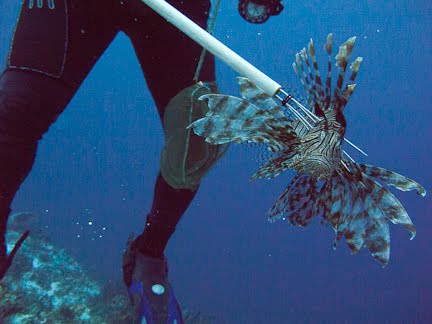
One photo shows the dreaded lionfish, coming to an appropriate end. A non-native fish that eats everything and has few predators, there is a lot of local effort to reduce their numbers. Dive masters are encourage to catch and kill as many as possible. Jorge killed five on this dive. Jennifer spotted this one and Jorge speared it.

We're leaving on the 6:00am ferry, driving south toward Chetumal, then west across the Yucatan peninsula, visiting some of the lesser-known Mayan sites between here and San Cristóbal. We arrive in San Cristóbal on Monday, check in with our school, and move in with a local family as part of our two weeks of intensive Spanish language classes.

Since the city sits at 7,000 feet, we're packing flannel shirts, fleece, and one of us is packing down. Island living thins the blood.

One of the more significant festivals in Mexico will take place while we are in SC, the Fiesta de Virgin de Guadalupe. Supposed to be filled with 12 days of colorful parades, processions, costumes(?) and prayer vigils.

After our class we are driving to the far eastern corner of Chiapas, along the Rio Usumacinta which forms the border between Mexico and Guatamala. We'll take in two more significant, but remote Mayan sites.

We'll post stories and photos as often as we can. As long as we keep up with our homework.

Cocina Economica #2 - Las Flamitas


We arrive at Las Flamitas for Monday lunch with friends Delfina and Paul and their friend, Greg. Paul had carried on about the Monday special, frijol con puerco. That's right pork 'n beans. But, this dish has about as much resemblance to pork and beans from the can, as Mexican food (the good regional stuff) does to Taco Bell.

While the menu is a bit more varied than most of the local lunch places, I'm thinking that the frijol de puerco is not to be missed. The first four orders are for that Monday special and then the waiter looks at me. I just can't say cinco. Always the non-comformist, I order pollo pibil.

I figure with four orders on the table, I'll still get a chance to taste it. Besides, I love the Yucatecan pibil style which marinates the chicken or pork in achiote seeds, sour orange and other spices. The meat is slow-cooked in banana leaves, usually in a pan over a charcoal grill. Check out Rick Bayless' web site for the recipe, or better yet, buy one of his cookbooks. They are great. http://www.rickbayless.com/recipe/view?recipeID=169

The agua fresca of the day was watermelon, chips and salsa came to the table, then all of the condiments for the frijol dish arrived. Bowls of chopped onion, radish, chiles and cilantro with wedges of lime, were soon joined by plates of slow-cooked pork (shoulder?) chunks, rice with black beans and avocado slices. Then, each eager eater got a bowl of black beans and broth, followed by lots of warm corn tortillas.

You can make tacos out of the foods spread in front of you, but our friends started dumping everything into the bowls. Sort of like a Yucatecan pho. This proved to be the way to eat this dish.

I was right, there was enough for me to have both dishes. All of mine and some of Jennifer's. Urp! Someone in the kitchen knows what they are doing and cares about it.

Can't wait to try more of the Yucatecan specialties at Las Flamitas.

Las Flamitas
Av 25, between 1 y 3
Cozumel
Open Monday - Saturday

Sunday, November 21, 2010

Cocina Economica - #1 - Cucina Italiana


One of the best food traditions, and values, in Mexico are Cocina Economica and loncherias. You don't need to speak Spanish to know that this means good value lunches. These places are really the Mexican equivalent of a diner with the daily blue plate special. Nothing fancy, just good, solid home cooking.

They are often in the owner's home, only open for lunch and almost always include a soup, main course and beverage for $4 - 8 usd. There are quite a few in Cozumel and we'll try to visit at least one a week. Here is our first, which, as it's name implies, does not serve Mexican food.

A mainstay on the island since 1986, it's a taste of Italia in Cozumel. The only thing missing is wise guys and small glasses of vino rosso. Not sure about the tough guys, but you'll rarely, if ever, find beer or wine at a cocina economica.

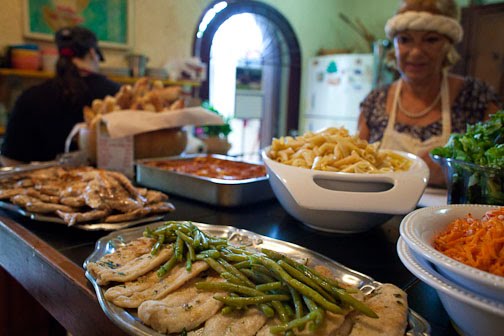
In a small house near downtown, the entrance is through a courtyard with a huge banyan tree and a bird cage full of songbirds. Inside you are greeted by Signora Torroni. The day's specials are displayed on large platters. During our visit they offered lasagna, fish filet with green beans, chicken breast with rosemary and a side of penne with red sauce. All of the mains included a minestrone, killer garlic bread, a salad tossed with a vinaigrette and a choice of lime tea, or melon aguas frescas (lighter than juice but loaded with fruit flavor).

Dessert is offered, but who has room for dessert after this much food? We'll be back.

Cucina Italiana
on Calle 6, between Ave 10 y 15
Lunches 1:00 PM until 5:00 PM


Kinta Mexican Bistro


It is no surprise that one of our favorite Cozumel restaurants receives great reviews from guide books, Trip Advisor and local forums.

The setting is stylish and relaxing, with a choice between an air conditioned dining room and an comfortable patio.

The ambiance enhances the food. It is terrific. Fresh flavors, creative combinations, and attractive plating all combine for a wonderful dining experience at a reasonable price.

Count yourself lucky if the flor de kalabaza is one of the appetizers. The squash blossoms are filled with a blend of three cheeses, lightly fried in a tempura batter and paired with a roasted red pepper sauce. La olla negra (black bean soup), the fish tacos (in photos) and the panuchos are three other appetizers we have enjoyed.

Salads offer usual and unusual pairings. We've had the freska with spinach, apple, dried cranberries, gorgonzola and tamarind vinaigrette.

The catch of the day (usually grouper or mahi mahi) with a red tomatillo sauce goes well with the Alameda Sauvignon Blanc (Chile). The porky pasilla is a near perfect dish of slow-cooked pork tenderloin medallions with a chile pasilla demiglaze, fig marmalade and mashed potatoes. Yucatecan meets California comfort food? Who cares? It's really good.

We've never had room for dessert, but were tempted by the mango kobbler on our last visit. The table next to us ordered it, but the waiter said it was made with apples that night. Mangos aren't in season until February. Something to look forward to.

A good wine list with South American and South African bottles is reasonable, and wines by the glass come in nice stemware and at the proper temperature.

With food this good, service that is knowledgeable and prompt, and fair prices, it would be easy to eat here every night. I wouldn't be surprised if some people do.

Kinta Mexican Bistro
5th Ave. between 2 y 4
869-0544
5:30 PM - 11:00 PM
Closed Monday

Friday, November 12, 2010

Vacation - Nope, we got Married


Sorry it has been awhile since we have posted a restaurant review. We've been pretty busy the past few weeks with friends and families coming and going.

We'll have loads of new reviews coming next week. Just a few of the places we love in Cozumel: Kinta, Le Chef/Olives, and Palancar Beach Club.

Tell your friends.