Friday, January 28, 2011

Visit to the U.S.


For many years, January has always seemed like the lost month. There never seemed to be any assignments and the weather was challenging. On the plus side, the month appears to go quickly into memory.

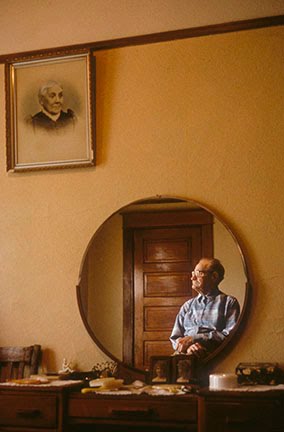
This January was not much different, except that we left our home on Cozumel and made a two-week whirlwind tour of the U.S. We attended the annual meeting and seminar at National Geographic offices in D.C. (but, we missed the meeting due to bad weather at Charlotte, NC airport). The seminar was great, with the first speaker, Abelardo Morell, inspiring us with his "camera obscura"photos:


Other highlights were visiting with friends and family in Severna Park, indulging in crab cakes, steamed oysters and clams from Annapolis Seafood. The American Visionary Art Museum, featuring "outsider art" in Baltimore is a must see:


A leisurely, but punctual Amtrak trip took us to New York Penn station. Cold, but sunny, we made the trek to the Met to see the Stieglitz, Steichen and Strand photo exhibit, some interesting furniture and a cool exhibit by Joan Miro. A stellar dinner followed at Sfoglia on 92nd & Lexington. Terrific mussels, Berkshire pork chop, branzino and orrechiette with lamb sausage. It was early and the weather wasn't horrible, so we walked to Demarchelier at 86th and Madison for the Upper East Side French bistro experience. About what you would expect; nice atmosphere with attitude. Decent creme brulee and chocolate mousse cake.

The next day, with no meetings and everyone we know working or occupied, we head to the new NYC Italian food mecca called Eataly. Located near the Flatiron building on 23rd and Broadway, it's the creation of Mario Batali, Joseph Bastianich and his mother, Lidia. All things Italian, and the best of all of those things - with prices to match.

It would kill me to live in the neighborhood, because I would want to shop there regularly, which would cost a fortune. The selection matches the quality. The best fresh and cured meat, seafood, cheese, produce, coffee, gelato and baked goods are located among food stations that offer seafood, vegetable dishes, cured meat and cheese plates, pizza, and well . . . . just about anything you can think of that is Italian.

Standing at a table in the La Piazza section , we had a plate with five kinds of cured meat, five kinds of cheese, a tricolore salad with reggiano, a glass of Spumante, and a glass of rosato. $56 with tip. A bit more than a Cozumel lunch at the taco stand. However, it was good and everyone should go once. At least. (all above photos taken at Eataly)

Another delay at the airport the next day, due to freezing rain and snow, but we eventually made it to Albuquerque. A visit to the Apple store, a visit to Creede, raid the storage unit and the sad discovery that after 52 years in business in Española, NM, Matilda's is closed.

We're back home, we've applied for our work visas, which, when granted, will allow us to launch our Mexican business. Stay tuned for details.

Friday, December 31, 2010

A Few Kodachrome Memories


Let's be clear about this from the start. I love shooting digital and I wouldn't trade my Canon 5D MkII for a boatload of film.

But, I would like to jump on the nostalgia, "in memoriam" Kodachrome bandwagon. I used it a lot as an amateur in the 70s, when I was trying (at great expense) to figure the whole photography thing out. If you missed the exposure on K25, you had a washed out mess or a contrasty problem.

When I was a newspaper photographer in the 80s, we never used it, unless we were on our own time. The newspaper had no time or place for a film that would take two - three days to process and be returned.

In the early 90s, I received Kodak sponsorship for a book project on Colorado ranches and farms. I think they sent 80 rolls of 64 and 200.

I started shooting assignments for the book division of National Geographic in the 90s. One of the first questions was, "You'll get 200 rolls of film for this assignment, what do you want?" Really? Anything? I played around a bit with 25 and 64, but really loved the Kodachrome 200. I always had my "low light" bodies loaded with 200. Almost always had it in the Leica. And I usually rated it at 400 ISO.

The photos on this post were all shot with it. If they don't look as vibrant as a color slide, blame it on the scanner, not the film.

They really did "take our Kodachrome away." More due to Kodak's stupidity than the marketplace. Or, maybe not.

Monday, December 20, 2010

Corner of Chiapas


travel [trae vel] vt or n 1. leave home, bad beds, ill-fitting sheets, diarrhea, constipation, topes( aka - speed bumps), insipid coffee, 4:00am fireworks 2. amazing countryside, vibrant fiestas, new friends, unforgettable moments, return home


Recently, my good friend Cecil asked why anyone who reads our blog, would think we’re not on a permanent vacation. I responded that it was because we never write about all of the hours of planning, editing and captioning, writing, rewriting, or meeting with lawyers and accountants and that we don’t mention the other perils of travel.


Those of us who travel for a living endure definition #1 so we can experience definition #2. Often, you only hear about #2. But, this essay includes both.


We started the trip with a plan to visit some of the lesser-know Mayan ruins in Campeche and Chiapas before and after our two-week Spanish intensive class in San Cristóbal, Chiapas. Earlier posts cover the trip to Chiapas, a day trip from the city and reviews of a few of our favorite restaurants and cafes.


It has taken a few days away from class to think about the whole “immersion” experience. We had individual sessions with our own teachers, since we are on different levels with Spanish. We met (and shivered - there were no heaters) from 9:00am until noon, five days a week. They were both good teachers. They were in tune with our fluency levels, and worked with us to give us the tools to become more proficient. We would recommend them if you are headed to San Cristóbal.


But the homestay part? Our living with a family experience turned out to be a living with a grandma experience. No aunts, uncles, husband, sons, nieces or cousins. On top of that, the conversations consisted of, “we are having chicken stewed with vegetables” and “what time do you want lunch, señor”. The conversation wasn’t particularly fluid. We’re not very fluent and she didn’t seem to want to fool with a couple of people at our level. Perhaps when the price per day for a room and two meals for two people comes to US$20, you get what you pay for.


So, the attitude of our host, the unheated room (40 degrees at night), the bare concrete floors, the hot water heater inexplicably turned down during our showers and the sheets that didn’t fit meant we were ready to leave before the two weeks ended. But, despite the annoyances and the aforementioned stomach problems, we stuck it out. Our Spanish is better, but I don’t think the Señora deserves any credit.


After classes ended, we headed south to Comitán, a small city 90 miles southeast of San Cristóbal. A 16th century church and modern sculptures in the immaculate zocalo were the backdrop for the unexpected arrival of Santa Claus in a beat up blue VW bug pulling a trailer with a wooden sleigh and four equally wooden reindeer. You had to be there.


The next day we continued our trip through a little traveled area of Chiapas that borders Guatemala. Driving into the highlands, we pass beautiful lakes and pine forests. Even though there is a steady drizzle and low clouds when we pay a toll to drive through the Lagos de Montebello park, a man comes up to the car and gives his pitch for a guided tour around and on the lakes. No sun means no good photos. We decline.


A quick detour into the town of Tziscao reveals a lovely setting, if it were summer. Unfortunately, it’s December, cold and, like I said, wet. The water level in the lakes was so high, several buildings that were along the lakefront beach, were now submerged in the lake.


The detour wasn’t a total loss, since Jennifer has become obsessed with orchids. She bought two lovely plants about to bloom at a small shop in town selling orchids, chocolate and coffee.


We continue through a lush, green landscape, with the misty mountains of Guatemala to our right most of the time. Because of the highway’s proximity to that country, the military checkpoints were the most thorough we have encountered. We answered lots of questions about our destination, where we came from, where we lived, our professions, and then were asked to get out of the vehicle so it and our luggage could be searched. Since we aren’t smugglers, we were eventually sent on our way. I highly recommend not carrying contraband (drugs or Central Americans) along this road.


Because of the unknown quotient of curves, topes and traffic, you can never be sure how many miles you can cover in a day. You can be sure that you want to be off of the Carretera Fronteriza before nightfall.


A couple of hours before dusk we decided to stop at an interesting “eco lodge” owned by a community that started a scarlet macaw reserve, Las Guacamayas. We heard howler monkeys at dusk and saw the large, colorful macaws flying near the Río Lancantún.


The next day was an easy drive to the village of Frontera Corozol, which would be our base for visiting the Mayan ruins at Bonampak and Yaxchilán. Not exactly the sites that people come to Mexico to visit. That is probably due more to their remoteness, rather than their magnificence.


There were less than 10 visitors at Bonampak, which featured the most amazing frescoes inside the Templo de las Pinturas which dates from the 700s. Lonely Planet says that they are the finest known murals from pre-Hispanic America, and I can’t imagine that they aren’t.


Part of the attraction of Yaxchilán is the 40-minute boat ride up the Río Usumacinta, with the shores of Guatemala sliding by on the right. If you’ve spent the night in Frontera, you can book an early departure, enjoying the mist rising from the river, crocs sunning themselves on the banks and arriving before the package tours from Palenque.


We shared the boat with Emilio and Veronica, two actors from Mexico City on holiday. For 90 minutes, we had the place to ourselves. Yaxchilán sits on a bluff overlooking the river in an amazing jungle setting. Upon arrival and for the first hour, we’re greeted by howler monkeys.


The incredible steles and the intricate carvings on the stone lintels makes this site different from the other sites we have seen. Perhaps the fact that the underside of the lintels are not exposed to sun and rain explains why they are in such good shape. Once again, amazing art from the years 700 - 800 AD.


As we were finishing our visit, we could hear the boats arrive with more visitors. Even then, there were never more than 40 people while we were there.


We had a nice drive from Frontera to Palenque, mostly because Emilio and Veroníca came with us. I think the two week class must have helped, because we had conversations in Spanish. I understood most of it. It certainly didn’t hurt, that they both spoke very distinctly and slow enough for the gringos to keep up.


A decent meal, a comfortable hotel room and good coffee the next morning put us in a good mood for the nine-hour drive to the Cozumel ferry. As always, it’s good to be home.


There are more photos from this trip in a private gallery on my web site. If you don’t have the password, please send an email and I’ll be happy to give it to you.


Also, check out the blog post on the Fiesta de Virgin de Guadalupe. It was going on for 12 of the 14 days we were in San Cristóbal. Which meant loud, fireworks that would begin about 4:00am and finally subside around midnight or 1:00am. On the eighth or ninth day, I barely noticed them.


Happy holidays and check in often.


Fiesta de Virgin de Gaudalupe


One of the attractions of a Spanish class in San Cristóbal, Chiapas during the first two weeks of December was the celebration for the Virgin de Guadalupe.

The fiesta runs from December 1 - 12, and, we were told, would feature many events, including processions of indigenous people going to the Iglesia de Guadalupe.


The church, which was begun in 1834, has a commanding location on a hilltop to the east of the historic center. The story of the Virgin de Guadalupe is an important part of Mexican history. Her appearance to an indigenous peasant, Juan Diego, in 1531, and her subsequent image on his cloak created the legend. Thus began a religious symbol that has seen the Virgin become, in many ways, more revered by Mexican Catholics than Jesus.


Mexican novelist Octavio Paz wrote that “the Mexican people, after more than two centuries of experiments, have faith only in the Virgin de Guadalupe and the National Lottery”.


In addition to the hundreds of local church members who make the daily walk up the steep steps to the church, are thousands who come from the surrounding towns to pay tribute to or seek blessings from the statue of the Virgin inside this church.


Indigenous people, young and old, make up a significant number of people visiting the hilltop. Many of them run and walk from their villages, some barefoot, carrying torches and banners to show their devotion.


Everything was remarkably unscheduled. Our classes and our favorite cafe were both on Real de Guadalupe, which is a pedestrian mall for several blocks and leads to the church from the zócalo. At any moment, honking horns, chanting, or blaring trumpets would announce the procession of a group from Palenque or Tuxtla or San Juan Chamula. It could be teens in t-shirts with the Virgin on the front, Aztec dancers, or Tzotzils in traditional dress. At times, it felt more like a pep rally or a political group chanting slogans. But like much of life here, religion isn’t always quiet and polite, it is, at times, noisy and showy.


On Friday, two days before the day of the Virgin (December 12), parents dress their boys up in peasant clothes and paint on mustaches to honor Juan Diego, who was made a saint in 2002. Little girls are dressed in different native dresses. A procession on the Real de Guadalupe to the church is led by the parachicos, a traditional dancing group from Chiapa de Corzo.


The streets at the foot of the steps fill with food stands, children’s rides and other merchants, providing a carnival atmosphere to the celebration. Surrounding the church, the presence of parents and children brings out the balloon and ice cream vendors and the fiesta feels like it has reached critical mass.


Through the week as each group approaches the church, one or two of the men are in charge of sending rockets into the air. Unfortunately, they aren’t the kind that create a visual show when they explode. They are simply, really loud. Which means there use isn’t limited to evening hours. So, for two weeks and twenty hours per day, it sounds like the city is under artillery attack.


You can see more complete coverage of the festival in a private gallery on my web site. If you don’t have the password, send an email to me and I’ll provide it.


Sunday, December 12, 2010

La Viña de Bacco


La Viña de Bacco


Here is the simple recipe for a successful restaurant: small tables, low light, great music, glasses of wine ($1.50 to $3.00) from Mexico, Argentina, Chile and Spain and a free bocadito with every glass you order.


Want more food? How about a dozen different small plates of cheese, olives, meats and spreads? Salads? Baguette sandwiches? Pasta? Yes to all, from a kitchen smaller than most restaurants baños.


I especially liked the chiapaqueño chorizo, the olives and the blue cheese.


On top of the vibe, the selection of wines by the glass and the small plates, there is a large list of wines by the bottle, beers and some foreign spirits. Tequila, too, if you need it. It’s no wonder this place is packed every night.


Sometimes, simpler is better.


2:00 - Midnight

Closed Sunday

#9 Real de Guadalupe

TierrAdentro


TierrAdentro


One of SCs hot spots, it never seems crowded, rushed or touristed. A classic cafe, yes, you can order a cup of coffee or glass of wine and sit and use the free wi-fi for hours (we have), although you probably won’t stop with just one cup or glass.


After days of looking for another place (just for variety) where we could do homework, check email and have a coffee or glass of wine, we decided this place was simply unbeatable. The atrium has plants, comfortable chairs, chill music and shops surrounding the central area that sell Zapatista-sympathetic items, fine weavings and a few other counter culture goodies.


The service is impeccable. The barista has won regional competitions, the pizza man has studied in Rome and the prices are more than fair. The breakfast waffles and huevos motuleños were terrific. And the pizza with real jamon serrano was one of the best pizzas I have had outside of Italy. The pizzaolo came over when he saw three pieces that weren’t finished and wanted to know if there was a problem. Sure, we didn’t have enough room to finish it all.


But, we’ll have the rest tonight.


8:30am - 11:00pm daily

#24 Real de Guadalupe


Trattoria Italiana


Trattoria Italiana


The choices of Italian restaurants in San Cristóbal are a little overwhelming. They are only exceeded by the number of Mexican places, with Argentine parillas taking a close second. We didn’t eat in all of them, but we had one of our best Italian meals in memory at Trattoria Italiana.


The small place exudes warmth, both in ambiance and in the personality of the mother and daughter who do the cooking and serving. From Northern Italy, they put together a daily menu that makes you feel like you are in Italy. Vitello tonnato, bruschetta, five kinds of ravioli, rabbit, menu items with porcini. Got it?


The menu is recited in English, Italian or Spanish. We go for the bruschetta, wonderful slices of bread with ripe tomatoes and perfect olive oil. We settled on the salmon ravioli with a butter, olive oil and rosemary sauce. The quattro formaggi and arugula raviolis were in a tomato sauce that was light and rich at the same time.


A couple of glasses of Spanish cabernet later, we waddled out the door, both saying aloud, “Wow, wish we had leftovers”.


#8B Belisario Dominguez